
Email Marketing for Beginners: How to Build Your First Email List in 2026
If you are starting online in 2026 and you are not building an email list, you are building on rented land.
Social media looks exciting. Followers go up. Likes come in. Views spike.
But here’s the truth most beginners learn too late:
You do not own your social media audience.
Algorithms decide who sees your content. Platforms can shadow-ban you, restrict reach, or shut accounts down without warning. Years of work can disappear overnight.
Email marketing is different.
Email is still the strongest digital asset you can build — especially for beginners. It is stable, predictable, and directly connects you to people who actually want to hear from you.
This guide will walk you through email marketing for beginners, step by step, without complexity, hype, or technical overload.
Why Social Media Followers Don’t Equal Ownership
Let’s clear a dangerous misconception first.
Many beginners believe:
“I have followers, so I have an audience.”
That’s false.
Here’s why social media followers don’t equal ownership:
Platforms control visibility, not you
Reach drops the moment algorithms change
Your posts don’t reach everyone who follows you
Accounts can be limited, suspended, or deleted
Even if you have 10,000 followers, only a fraction actually sees your content.
Email works differently.
When someone gives you their email:
You can reach them directly
No algorithm decides delivery
Your message lands in their inbox
That’s ownership.
Why Email Is Still the Strongest Digital Asset in 2026
Some beginners think email is “old.”
That thinking costs them money.
Email marketing still dominates because:
Everyone has an email address
Email works across all platforms
Email converts better than social media
Email scales long-term
Social media is for attention.
Email is for relationship and conversion.
That’s why smart beginners start with email first, not last.
What Is Email Marketing? (Simple Explanation)
Email marketing is the process of:
Collecting email addresses from interested people
Sending them useful, relevant messages over time
Building trust, value, and connection
Eventually promoting offers, products, or services
That’s it.
No jargon. No complicated theory.
Email marketing is not spam.
It is permission-based communication.
If someone joins your email list, they are saying:
“I want to hear from you.”
That alone makes email powerful.
Why Beginners Should Start with Email First
Most beginners delay email marketing. That’s a mistake.
Here’s why email should be your first system, not your last.
You Own the Audience
When someone joins your email list:
You keep that contact
You control communication
You are not dependent on a platform
If social media disappears tomorrow, your email list stays.
Ownership creates stability. Stability creates growth.
Algorithms Don’t Control Emails
On social media:
You post and hope it gets shown
With email:
You send and it gets delivered
There is no algorithm deciding whether your email deserves reach.
This makes email predictable and reliable.
Email Converts Better Than Social Media
This is not opinion. It’s reality.
Email converts better because:
People check emails intentionally
Messages are more personal
Attention is higher than scrolling feeds
Beginners don’t need massive reach.
They need focused connection — and email delivers that.
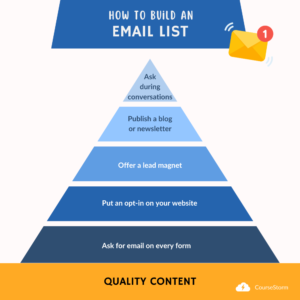
How to Build Your First Email List (Step-by-Step)
This is where most beginners overcomplicate things.
You don’t need funnels, ads, or advanced tools to start.
You need clarity and simplicity.
Follow these steps.
Step 1: Pick One Clear Topic
Your email list needs a reason to exist.
Ask yourself:
What do I want to talk about consistently?
What problem can I help with?
Who am I helping?
Examples:
Email marketing basics
Freelancing skills
Online income foundations
Productivity for beginners
One topic. One audience.
Clarity beats variety.
Step 2: Create a Simple Free Resource
People don’t give emails “just because.”
You need a clear value exchange.
This can be:
A short guide
A checklist
A beginner roadmap
A simple PDF
It does NOT need to be long or perfect.
The goal is to:
Solve one small problem
Deliver quick value
Build trust
Simple wins.
Step 3: Use One Signup Form
Beginners make the mistake of adding too many forms everywhere.
Don’t.
Start with:
One signup form
One landing page or section
One clear call-to-action
Your message should be simple:
“Enter your email to get [specific benefit].”
No confusion. No pressure.
Step 4: Drive Traffic from Social Media
Social media still matters — but for a different purpose.
Use social media to:
Share value publicly
Build visibility
Direct people to your email list
Social media attracts.
Email retains.
This combination is powerful when used correctly.
Common Mistakes Beginners Make (Avoid These)
Most beginners don’t fail because email marketing doesn’t work.
They fail because they make avoidable mistakes.
Let’s call them out.
Buying Email Lists
This is the fastest way to destroy trust.
Bought lists:
Don’t know you
Didn’t give permission
Will ignore or report emails
Email marketing works because of consent.
Buying lists breaks that foundation.
Never do it.
Over-Emailing
Some beginners panic and start sending emails daily with no value.
That leads to:
Unsubscribes
Ignored emails
Lost trust
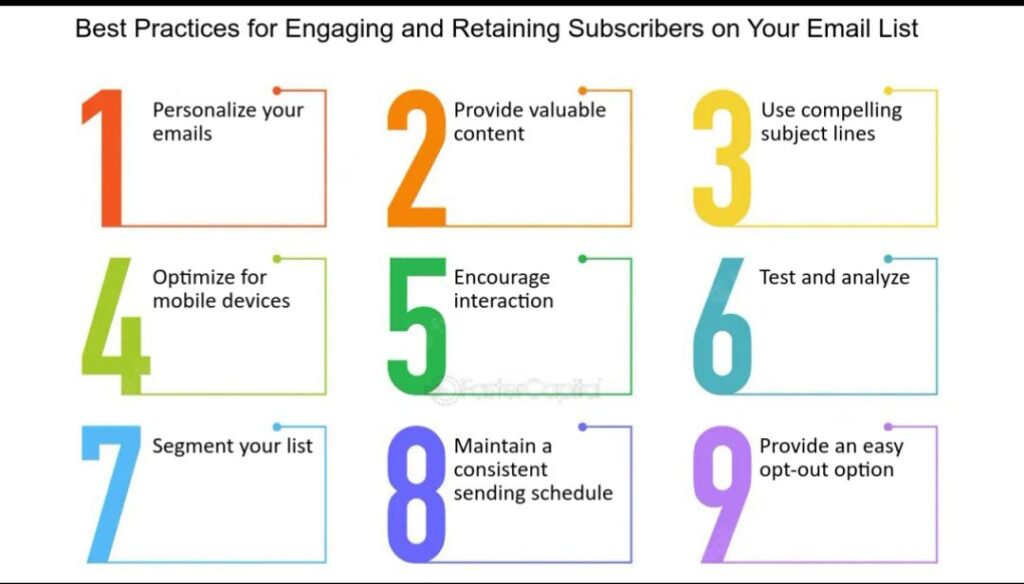
Consistency matters more than frequency.
Quality over quantity — always.
No Clear Value
If your emails don’t help, educate, or guide, people leave.
Every email should answer:
“Why should I read this?”
Value is not optional. It’s the entire game.
Tools You Actually Need (Beginner Level)
You do NOT need complex software to start.
Here’s what beginners actually need:
An email marketing platform
A basic signup form
A way to send emails
That’s it.
On novelsprout.com, our Email Marketing & List Building category focuses on beginner-friendly resources that remove confusion and help you build systems step by step — without overwhelm.
Start simple. Add tools only when needed.
What Your First Emails Should Look Like
Beginners often ask:
“What should I send?”
Keep it simple:
Introduce yourself
Explain what subscribers will receive
Deliver value immediately
Stay consistent
Your goal is trust, not selling.
Sales come later.
How Often Should Beginners Email?
There is no perfect number.
But here’s a solid starting rule:
1–2 emails per week
Enough to stay visible.
Not enough to feel annoying.
Consistency builds familiarity. Familiarity builds trust.
Why Email Is Long-Term Leverage
Social posts disappear in hours.
Emails compound.
An email list:
Grows over time
Builds authority
Creates predictable traffic
Supports future offers
This is leverage.
Beginners who start early win later — without scrambling.
Final Thoughts: Start Simple, Stay Consistent
Email marketing for beginners does not need to be complicated.
You don’t need:
Fancy funnels
Advanced automation
Paid ads
You need:
One topic
One signup
One free resource
Consistent value
Start small. Improve as you go.
Email is not fast money.
Email is long-term leverage.
If you build it early, it will support everything you do later.
And that’s why, in 2026, email is still the smartest system beginners can build.



novelsprout
Digital learning creator at NovelSprout. Helping beginners earn online with practical, step-by-step guides.